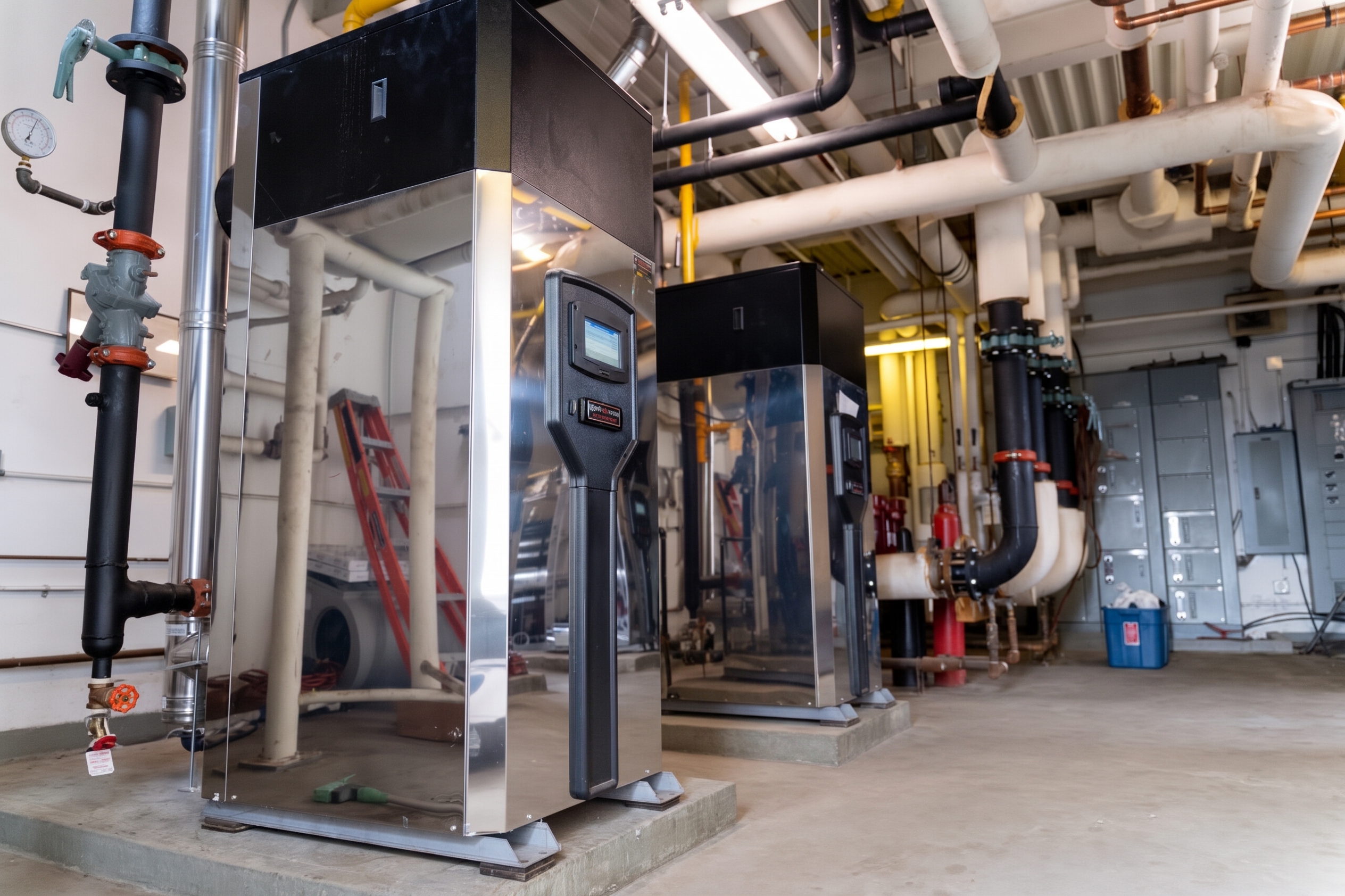
Replacing a boiler used to be straightforward. When it wore out, you swapped it. Now an “energy upgrade” can mean moving from one fuel to another, integrating heat pumps and solar PV, and adding controls to optimize an entire system.
“Instead of a simple one-for-one equipment swap, today’s retrofits require integrating complex, specialized systems,” says Matt Zipchen, President of Efficiency Capital. “It’s not that owners lack the expertise or haven’t done the analysis. It’s that managing this level of infrastructure complexity — from specialized funding to asset-wide planning, design and implementation — isn’t their core business. Outsourcing a simple boiler swap may not make sense, but having a partner deliver and manage a fully integrated system does.”
To solve that problem, Efficiency Capital, an infrastructure-as-a-service provider, helps building owners upgrade complex energy systems without tying up their balance sheets. The team structures the project economics, designs the retrofit, oversees portfolio-scale implementation, and operates the infrastructure for long-term performance.
“Infrastructure-as-a-service is essentially outsourcing building systems to external partners who are invested for the long-term,” says Matt. “Whether you’re looking at it from a real-estate valuation and capital optimization perspective, or focusing on long-term affordability and resident comfort, does it really matter who owns the HVAC systems as long as they perform?”
According to Efficiency Capital, retrofits tend to stall for three reasons: capital, confidence, and capacity. Owners may prefer to allocate scarce capital to their core business, may not feel confident underwriting the long-term performance of complex infrastructure, or could simply lack the internal capacity to manage specialized financial structuring and multi-building rollouts all at once.
This is where Efficiency Capital comes in. The company acts as a trusted guide, handling the heavy lifting of financial structuring, project development, and execution. The remaining hurdle is finding institutional capital partners that can deliver turnkey projects at scale.
Unlocking scale: Separating real estate from infrastructure
Estimates suggest that modernizing Canada’s aging building stock will require investment on the order of $40 to $70 billion annually over the coming decades. However, most asset owners are already fully levered under traditional commercial real estate finance models. You simply cannot squeeze a tenfold capital increase through a real estate debt model that is already tapped out.
“If the real estate capital stack is full, the only way to fund these massive upgrades is to decouple the infrastructure layer from the real estate layer,” says Matt. “By making infrastructure a service, we bring an entirely new, parallel lane of institutional capital into the building. It lives alongside the real estate capital without competing for balance sheet capacity.”
But deploying that capital requires a new kind of financial plumbing.
“Retail banks are rarely equipped to underwrite individual $1 million unsecured project loans building by building—the transaction costs are too high, and the asset class is too foreign,” adds Matt.
Dan Schwartz, Business Development Manager at Vancity Community Investment Bank, sees that friction firsthand.
“Most banks aren’t set up to lend against complex, small to medium-scale infrastructure contracts,” says Dan. “You still need due diligence on each building, and the work to underwrite a $10 million facility is similar to a much larger one. But we are committed to doing the work to move impactful projects forward, and to help improve building conditions for the people who live in them.”
In that spirit, Vancity’s federally incorporated subsidiary, Vancity Community Investment Bank, provided a dedicated credit facility to refinance a portfolio of Efficiency Capital’s operating infrastructure projects in multi-unit residential buildings across the Greater Toronto Area. This included heat pump and HVAC retrofits, onsite solar, and energy storage.
Looking ahead, Efficiency Capital is now expanding beyond multi-residential buildings into new building types and geographies, including Quebec and Western Canada. That expansion speaks to the sheer scale of the challenge facing our aging building stock.
“This isn’t just about meeting net-zero mandates; it’s about protecting asset value, improving human health, and managing the economic realities of aging systems and a changing climate,” says Matt. “We need to make it easier for owners to say yes to modernizing their infrastructure.”
___________
If you’re a building owner, developer, housing provider, or organization pursuing energy upgrades, get in touch.
Our climate finance team can help turn retrofit plans into action, supporting projects ranging from targeted building improvements to deep energy retrofits.